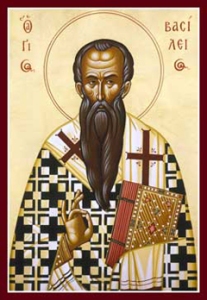
Basil the Great: God Sees Into the Hearts of Those who Pray Friday, May 24 2013 

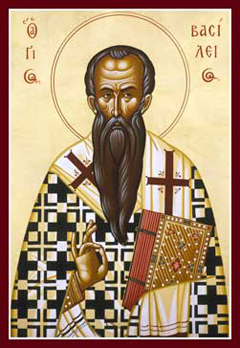
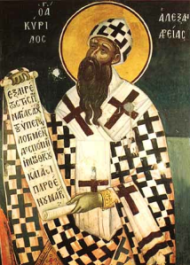
Basil_of_Caesarea_iconGod sees into the hearts of those who pray.

What need then, someone will say, that we should ask God for what we need?  Does He not know already what we need?  Why then should we pray?

God does indeed know what things we need, and with generosity provides all we need for the refreshment of our bodies, and since He is good He sends down His rains upon the just and the unjust alike, and causes His sun to shine upon the good and the bad (Mt. 5:45), even before we ask Him.

But faith, and the power of virtue, and the kingdom of heaven, these you will not receive unless you ask for them in labouring and steadfastness.  We must first long for these things.

Then when you desire them, you must strive with all your heart to obtain them, seeking them with a sincere heart, with patience, and with faith, not being condemned by your conscience, as praying without attention or without reverence, and so in time, when God wills, you will obtain your request.

For He knows better than you when these things are expedient for you.  And perhaps He is delaying in giving them to you, designing to keep your attention fixed upon Him; and also that you may know that this is a gift of God, and may safeguard with fear what is given to you.

[...] Do not then lose heart if you do not speedily obtain your request.  For if it were known to Our Good Master that were you at once to receive this favour that you would not lose it, He would have been prepared to give it to you unasked.  But being concerned for you, He does not do this.

[...] Keeping this in mind, let us continue to give thanks to the Lord whether we receive speedily or slowly that which we pray for.  For all things whatsoever the Lord may do He orders all to the end of our salvation; only let us not through faintheartedness cease from our prayers.

It was because of this the Lord spoke the parable of the Widow who persuaded the judge through her steadfastness (Luke 18:2-5): that we also through our steadfastness in prayer may obtain what we ask for.

By this we also show our faith, and our love of God, since though we do not quickly receive what we ask for, yet we remain steadfast in praising Him and giving thanks.  Then let us give Him thanks at all times, so that we may be found worthy of receiving His everlasting gifts; since to Him all praise and glory is due for ever and ever.  Amen.

Basil the Great (330-379): Monastic Constitutions, ch. 1, 6-7 @ Lectionary Central.

Rupert of Deutz: The Power of God and the Justice of the Eternal King Wednesday, Apr 24 2013 

Rupert_von_Deutz_-_Federzeichnung_Codec_lat._11355(On Revelation chapter 15)

Let us sing to the Lord, great is his renown! Horse and rider he has thrown into the sea.

It is common knowledge that the song of Moses recorded in the Book of Exodus can be understood in a spiritual sense as pointing forward to the Gospel teaching on regeneration.

[...] The author of the Apocalypse is therefore correct in describing the hymn sung by the saints in heaven as the song of Moses, the servant of God, and the song of the Lamb.

By giving it this title, he is linking together a historical event and a spiritual reality.

The crossing of the sea under the leadership of Moses is seen as a foreshadowing of what Christ, the Lamb of God, does for us in the regenerating waters of Baptism.

‘Lamb of God’ is used here as a richly evocative designation for the son of God, into whose death we have been baptized.

When Moses first intoned his song, he did so in honour of an event that had begun with the slaying of a lamb.

God himself had ordained that on the evening of the fourteenth day of the first month a lamb should be sacrificed.

The slaughter of that lamb prefigured the death of Christ, the Son of God, who was destined to be slain in expiation of our sins.

[...] The saints, therefore, are described as singing the song of Moses because they resemble Moses both in their singing and in the subject matter of their song.

But while they too praise the Lord with joy and thanksgiving to the accompaniment of harps, their song consists of one short verse only.

This single verse contains none the less two all-important themes: the power of God and the justice of the Eternal King.

Great and wonderful are your deeds is a proclamation of God’s power. Just and true are your ways is an acknowledgement of his justice.

Of the two it is surely more meritorious to confess the second than the first. If we fear and praise God as the most powerful of spirits because we witness his marvellous deeds, our confession is certainly not lacking in merit.

But if we can discern the divine justice underlying these same deeds and strenuously uphold it in the face of every denial, we shall gain a far greater blessing.

And the same is true even when discernment fails us: we are blessed indeed if we still bow down in loving adoration of God’s justice, worshiping him in the words the Apostle Paul teaches each one of us to say:

O the depths of the riches and wisdom and knowledge of God! How incomprehensible are his judgments, how unfathomable his designs!

Rupert of Deutz (c.1075–1129): In Apoc. 9.15 (PL 169:1109-1110); from the Monastic Office of Vigils for Wednesday of the 4th Week in Eastertide, Year 1.

John Climacus: Love is a Resemblance to God Sunday, Apr 14 2013 

ClimacusHe who wishes to speak about divine love undertakes to speak about God. But it is precarious to expatiate on God, and may even be dangerous for the unwary.

The angels know how to speak about love, and even they can only do this according to the degree of their enlightenment.

God is love. So he who wishes to define this, tries with bleary eyes to measure the sand in the ocean.

Love, by reason of its nature, is a resemblance to God, as far as that is possible for mortals; in its activity it is inebriation of the soul; and by its distinctive property it is a fountain of faith, an abyss of patience, a sea of humility.

Love is essentially the banishment of every kind of contrary thought for love thinks no evil.

Love, dispassion and adoption are distinguished as sons from one another by name, and name only.

Just as light, fire and flame combine to form one power, it is the same with love, dispassion and adoption.

As love wanes, fear appears; because he who has no fear is either filled with love or dead in soul.

There is nothing wrong in representing desire, and fear, and care and zeal and service and love for God in images borrowed from human life.

Blessed is he who has obtained such love and yearning for God as an enraptured lover has for his beloved.

Blessed is he who fears the Lord as much as men under trial fear the judge. Blessed is he who is as zealous with true zeal as a well-disposed slave towards his master.

Blessed is he who has become as jealous of the virtues as husbands who remain in unsleeping watch over their wives out of jealousy.

Blessed is he who stands in prayer before the Lord as servants stand before a king. Blessed is he who unceasingly strives to please the Lord as others try to please men.

Even a mother does not so cling to the babe at her breast as a son of love clings to the Lord at all times.

He who truly loves ever keeps in his imagination the face of his beloved, and there embraces it tenderly.

Such a man can get no relief from his strong desire even in sleep, even then he holds converse with his loved one. So it is with our bodily nature; and so it is in spirit.

One who was wounded with love said of himself (I wonder at it): I sleep because nature requires this, but my heart is awake in the abundance of my love.

John Climacus (c.575-c.650): The Ladder of Divine Ascent, step 30, 4-13, translated by Archimandrite Lazarus Moore (Harper & Brothers, 1959) @ Prudence True.

Gregory Palamas: The Prayer of the Publican: “God Be Merciful to Me a Sinner” Tuesday, Mar 5 2013 

Gregory_PalamasAnd the publican, standing afar off, would not lift up so much as his eyes unto heaven, but smote upon his breast, saying, God be merciful to me a sinner (Luke 18:13).

See the extent of his humility, faith and self-reproach. See the utter abasement of his thoughts and feelings, and, at the same time, contrition of heart mingled with this publican’s prayer.

When he went up into the Temple to pray for the remission of his sins, he brought with him good advocates before God: unashamed faith, un-condemned self-reproach, contrition of heart that is not despised and humility that exalts.

[...] Without any other intention or thought he paid attention only to himself and God, turning over and repeating the supplication of a single thought,’ the most effective of all prayers.

“And the publican, standing afar off, would not lift up so much as his eyes unto heaven” (Luke 18:13).

As he stood he bowed down, and his bearing was not only that of a lowly servant, but also of a condemned man. It also proclaims a soul delivered from sin.

Although still far from God, without the boldness towards Him that comes from good works, it hopes to draw near to him because it has already renounced evil and is intent on good.

[...] He saw himself as unworthy either of heaven or of the earthly Temple, so he stood on the threshold of the Temple, not daring even to turn his gaze towards heaven, still less towards the God of heaven.

In his intense contrition he smote upon his breast to show he was worthy of punishment. He sighed in deepest mourning, bowing his head like a condemned man, calling himself a sinner and begging with faith for forgiveness, saying, “God be merciful to me a sinner”.

For he believed Him Who said, “Turn ye unto me, and I will turn unto you” (Zech. 1:3), and the Prophet who bore witness, “I said, I will confess my transgressions unto the Lord, and thou forgavest the iniquity of my heart” (cf. Ps. 32:5).

What happened then? “This man”, says the Lord, “went down to his house justified rather than the other, for every one that exalteth himself shall be abased; and he that humbleth himself shall be exalted” (Luke 18:14).

[...] Humility is the chariot by which we ascend to God, like those clouds which are to carry up to God those who would dwell for endless ages with Him…

Humility is the same as such a cloud. It is formed by repentance, releases streams of tears; brings out the worthy from among the unworthy and leads them up to unite them with God, justified by His free gift for the gratitude of their free disposition.

Gregory Palamas (1296-1359): Homily on the Publican and the Pharisee, 13-15, from Saint Gregory Palamas: The Homilies (Mount Thabor Publishing, 2009) @ Kandylaki.

Cyril of Alexandria: The Publican and the Pharisee (2) – The Publican Friday, Mar 1 2013 

Cyril_of_AlexandriaBut what of the publican? He stood, it says, “afar off,” not even venturing, so to speak, to raise up his eyes on high.

You see him abstaining from all boldness of speech, as having no right thereto, and smitten by the reproaches of conscience: for he was afraid of being even seen by God, as one who had been careless of His laws, and had led an unchaste and dissolute life.

You see also that by his external manner, he accuses his own depravity. For the foolish Pharisee stood there bold and broad, lifting up his eyes without scruple, bearing witness of himself, and boastful.

But the other feels shame at his conduct: he is afraid of his Judge, he smites upon his breast, he confesses his offences, he shows his malady as to the Physician, he prays that he may have mercy.

And what is the result? Let us hear what the Judge says, “This man, He says, went down to his house justified rather than the other.”

Let us therefore “pray without ceasing,” according to the expression of the blessed Paul: but let us be careful to do so aright.

The love of self is displeasing to God, and He rejects empty haughtiness and a proud look, puffed up often on account of that which is by no means excellent.

And even if a man be good and sober, let him not on this account suffer himself to fall away into shameful pride: but rather let him remember Christ, Who says to the holy apostles, “When you have done all those things, those namely which have been commanded you, say, We are unprofitable servants, we have done that which was our duty to do.’’

For we owe unto God over all, as from the yoke of necessity, the service of slaves, and ready obedience in all things.

Yes, though you lead an excellent and elect life, don’t exact wages from the Lord; but rather ask of Him a gift. As being good, He will promise it you: as a loving Father, He will aid you.

Restrain not yourself then from saying, “God be merciful to me the sinner.” Remember Him Who says by the voice of Isaiah, “Declare you your sins first, that you may be justified.”

Remember too that He rebukes those who will not do so, and says, “Behold, I have a judgment against you, because you say  ‘I have not sinned’.”

Examine the words of the saints: for one says, “The righteous is the accuser of himself in the beginning of his words.”

And another again, “I said, I will confess against myself my transgression unto the Lord: and you forgave the iniquity of my heart.”

Cyril of Alexandria (c. 376-444): Homilies on the Gospel of St. Luke, 120 @ Pravoslavie.

Bede the Venerable: Turbulent Thoughts During Prayer Thursday, Feb 28 2013 

The_Venerable_Bede_translates_John_1902(On Matthew 15:21-28 – the story of the Canaanite woman).

There are some who, upon entering a church, stretch out their psalm-singing or their prayer with many words, but because their heart is directed elsewhere, they do not even reflect upon what they are saying.

They pray, to be sure, with their mouths, but they deprive their mind, which is wandering outside, of all the fruit of their prayer.

The ancient enemy…is aware of the benefit of praying, and he envies human beings the gift of having their requests granted, so he sends upon those who are praying many kinds of frivolous thoughts, and sometimes too phantasms of things that shameful and harmful.

By these he can interfere with prayer in such a way that occasionally, when we are prostrated in prayer, we may endure great surges of thoughts which run every which way.

[...] We must take care to triumph over the acknowledged malice of the devil, clearing our mind, as far as we can, of every sort of cloud which the enemy rejoices in sprinkling about, and begging for the continuing protection of the benevolent Defender, who is able to grant to those entreating him, no matter how unworthy they are, both the grace of praying in a pure way, and that of having their requests granted completely.

It will help the purity of our prayer a great deal if in every place and time we restrain ourselves from forbidden acts, if we always check our hearing along with our speaking with regard to idle conversation, if we habituate ourselves to walking in the law of the Lord and scrutinizing his testimonies with all our heart (Psalm 118:1-2).

Whatever things we are accustomed to do, speak, or hear most often, these same things will necessarily return to our mind most often as though to their accustomed and proper place.

And just as pigs are accustomed to frequent marshy wallowing places, and doves to frequent clear flowing streams, so too impure thoughts disturb an unclean mind, and spiritual thoughts sanctify a chaste one.

If, after the example of the Caananite woman, we continue resolutely in our praying, and remain of fixed purpose, certainly the grace of our Maker will be with us to correct everything in us which is wrong, to sanctify everything unclean, and to make serene everything which is turbulent.

He is faithful and just, so that he will forgive us our sins and cleanse us from every iniquity, if with the attentive voice of our mind we cry out to him who lives and reigns with the Father in the unity of the Holy Spirit, God for all ages and ages.

The Venerable Bede (672/4-735): Homilies on the Gospels, 1:22 (Lent), “Homilies on the Gospels, Book One, Advent to Lent”, trans. Lawrence T. Martin and David Hurst OSB (Kalamazoo: Cistercian Publications, 1991) @ Lectionary Central.

Benedict XVI: The Mystery of the Transfiguration and the Agony in Gethsemane Monday, Feb 25 2013 

Pope_Benedictus_XVIOn the Second Sunday of Lent, the Evangelist Luke emphasizes that Jesus went up on the mountain “to pray” (9:28), together with the Apostles Peter, James and John, and it was “while he prayed” (9:29) that the luminous mystery of his Transfiguration occurred.

Thus, for the three Apostles, going up the mountain meant being involved in the prayer of Jesus, who frequently withdrew in prayer especially at dawn and after sunset, and sometimes all night.

However, this was the only time, on the mountain, that he chose to reveal to his friends the inner light that filled him when he prayed: his face, we read in the Gospel, shone and his clothes were radiant with the splendour of the divine Person of the Incarnate Word (cf. Lk 9:29).

There is another detail proper to St Luke’s narrative which deserves emphasis: the mention of the topic of Jesus’ conversation with Moses and Elijah, who appeared beside him when he was transfigured.

As the Evangelist tells us, they “talked with him… and spoke of his departure” (in Greek, éxodos), “which he was to accomplish at Jerusalem” (9:31).

Therefore, Jesus listens to the Law and the Prophets who spoke to him about his death and Resurrection.

In his intimate dialogue with the Father, he did not depart from history, he did not flee the mission for which he came into the world, although he knew that to attain glory he would have to pass through the Cross.

On the contrary, Christ enters more deeply into this mission, adhering with all his being to the Father’s will; he shows us that true prayer consists precisely in uniting our will with that of God.

For a Christian, therefore, to pray is not to evade reality and the responsibilities it brings but rather, to fully assume them, trusting in the faithful and inexhaustible love of the Lord.

For this reason, the verification of the Transfiguration is, paradoxically, the Agony in Gethsemane (cf. Lk 22:39-46).

With his impending Passion, Jesus was to feel mortal anguish and entrust himself to the divine will; his prayer at that moment would become a pledge of salvation for us all.

Indeed, Christ was to implore the Heavenly Father “to free him from death” and, as the author of the Letter to the Hebrews wrote: “he was heard for his godly fear” (5:7). The Resurrection is proof that he was heard.

Dear brothers and sisters, prayer is not an accessory or “optional”, but a question of life or death. In fact, only those who pray, in other words, who entrust themselves to God with filial love, can enter eternal life, which is God himself.

Benedict XVI (b. 1927): Angelus Address, Second Sunday of Lent, 4 March 2007 @ Vatican Website.

Dorotheus of Gaza: The Sickness of Sin and the Healing of God Friday, Feb 15 2013 

Dorotheus_of_GazaIn the beginning when God created man he set him in paradise, as the divine holy scripture says (Gen 2:25), adorned with every virtue, and gave him a command not to eat of the tree in the middle of paradise (Gen 2:16-17).

He was provided for in paradise, in prayer and contemplation in the midst of honor and glory; healthy in his emotions and sense perceptions, and perfect in his nature as he was created.

For, to the likeness of God did God make man (Gen 1:27); that is, immortal, having the power to act freely, and adorned with all the virtues.

When he disobeyed the command and ate of the tree that God commanded him not to eat of, he was thrown out of paradise and fell from a state in accord with his nature to a state contrary to nature: i.e. a prey to sin, to ambition, to a love of the pleasures of this life and the other passions; and he was mastered by them, and became a slave to them through his transgression.

Then little by little evil increased and death reigned (Rom 5:14). There was no more piety, and everywhere was ignorance of God.

[...] Then God in his goodness had mercy on his creatures and gave Moses a written law…as a help, for their conversion, for putting right what was evil, but they did not reform. He sent the prophets, but they were able to do nothing.

For evil prevailed as said Isaiah, “no injury, no bruise, no wound was cauterized; no chance of soothing dressings; no oil, no bandaging of wounds” (Is 16), as much as to say that the evil was not in one member, or in one place, but in the whole body.

It took in the whole soul and all its powers. Everything was a slave to sin, everything was under the control of sin. As Jeremiah said, “We would heal Babylon but she would not be healed” (Jer 28:9). That is to say, we have revealed your [God’s] name, we have announced your commandments, your benefits and your warnings.

[...] All the same she is not healed; she has not been converted, she has not feared, she has not turned from her wickedness. In another place he says, “they have not submitted to discipline” (Jer 2:30), that is, correction and instruction. And in the psalm it says, “their soul abhors all nourishment and has come near to the gates of death” (Ps 107:18).

Then at last the good, man-loving God sends his only begotten Son. It was for God alone to heal and prevail against such miseries.

Dorotheos of Gaza (505-565 or 620: Conference on Renunciation @ Fr Luke Dysinger, OSB.

John Climacus: Let Us Who Are Weak and Passionate Have the Courage to Offer Our Infirmity and Natural Weakness to Christ Wednesday, Feb 13 2013 

ClimacusThe man who has withdrawn from the world in order to shake off his own burden of sins, should imitate those who sit outside the city amongst the tombs,

and should not discontinue his hot and fiery streams of tears and voiceless heartfelt groanings until he, too, sees that Jesus has come to him and rolled away the stone of hardness from his heart,

and loosed Lazarus, that is to say, our mind, from the bands of sin, and ordered His attendant angels:

Loose him (cf John 11:44) from passions, and let him go to blessed dispassion. Otherwise he will have gained nothing.

Those of us who wish to go out of Egypt and to fly from Pharaoh, certainly need some Moses as a mediator with God and from God,

who, standing between action and contemplation, will raise hands of prayer for us to God, so that guided by Him we may cross the sea of sin and rout the Amalek of the passions (Exodus 17).

That is why those who have surrendered themselves to God, deceive themselves if they suppose that they have no need of a director.

Those who came out of Egypt had Moses as their guide, and those who fled from Sodom had an angel.

The former are like those who are healed of the passions of the soul by the care of physicians: these are they who come out of Egypt.

The latter are like those who long to put off the uncleanness of the wretched body. That is why they need a helper, an angel, so to speak, or at least one equal to an angel.

For in proportion to the corruption of our wounds we need a director who is indeed an expert and a physician.

Those who aim at ascending with the body to heaven, need violence indeed and constant suffering especially in the early stages of their renunciation, until our pleasure-loving dispositions and unfeeling hearts attain to love of God and chastity by visible sorrow.

A great toil, very great indeed, with much unseen suffering, especially for those who live carelessly,

until by simplicity, deep angerlessness and diligence, we make our mind, which is a greedy kitchen dog addicted to barking, a lover of chastity and watchfulness.

But let us who are weak and passionate have the courage to offer our infirmity and natural weakness to Christ with unhesitating faith, and confess it to Him;

and we shall be certain to obtain His help, even beyond our merit, if only we unceasingly go right down to the depth of humility.

John Climacus (c.575-c.650): The Ladder of Divine Ascent, step 1, 6-8, translated by Archimandrite Lazarus Moore (Harper & Brothers, 1959) @ Prudence True.

John of Karpathos: It is Christ Himself that We Breathe Monday, Jan 14 2013 

johnkarpathosSometimes our soul grows despondent at the huge swarm of its sins and temptations, and says, ‘Our hope is gone and we are lost’ (Ezek. 37:11; LXX).

Yet God, who does not despair of our salvation, says to us: ‘You shall live, and you shall know that I am the Lord’ (Ezek. 37:6).

To the soul that doubts how it can ever give birth to Christ through great acts of holiness, these words are said: ‘The Holy Spirit shall come upon you’ (Luke 1:35).

Where the Holy Spirit is present, do not expect any more the sequence and laws of nature and habit.

The Holy Spirit whom we worship is all-powerful, and in an astonishing way He brings into existence what does not as yet exist within us.

The intellect that was previously defeated He now makes victorious: for the Paraclete who in compassion comes upon us from above ‘is higher than all’ (John 3:31), and He raises us above all natural impulses and demonic passions.

Struggle to preserve unimpaired the light that shines within your intellect.

If passion begins to dominate you when you look at things, this means that the Lord has left you in darkness; He has dropped the reins with which He was guiding you, and the light of your eyes is gone from you (cf. Ps. 38:10).

Yet even if this happens, do not despair or give up, but pray to God with the words of David: ‘O send out Thy light and Thy truth to me in my gloom, for Thou art the salvation of my countenance and my God’ (cf. Ps. 43:3, 5); ‘Thou shalt send forth Thy Spirit and they shall be created; and Thou shalt renew the face of the earth’ (Ps. 104: 30; LXX).

Blessed is he who, with a hunger that is never satisfied, day and night throughout this present life makes prayer and the psalms his food and drink, and strengthens himself by reading of God’s glory in Scripture.

Such communion will lead the soul to ever-increasing joy in the age to come.

Do all in your power not to fall, for the strong athlete should not fall. But if you do fall, get up again at once and continue the contest.

Even if you fall a thousand times because of the withdrawal of God’s grace, rise up again each time, and keep on doing so until the day of your death.

For it is written, ‘If a righteous man falls seven times’ – that is, repeatedly throughout his life – seven times ‘shall he rise again’ (Prov. 24: 16; LXX).

John of Karpathos (7th century): For the Encouragement of the Monks in India, 81-84, trans. G.E.H. Palmer, P. Sherrard, and K. Ware, The Philokalia, vol. 1 (Faber and Faber, London & Boston: 1979), pp. 317-318.

Next Page »

Follow

Get every new post delivered to your Inbox.

Join 150 other followers